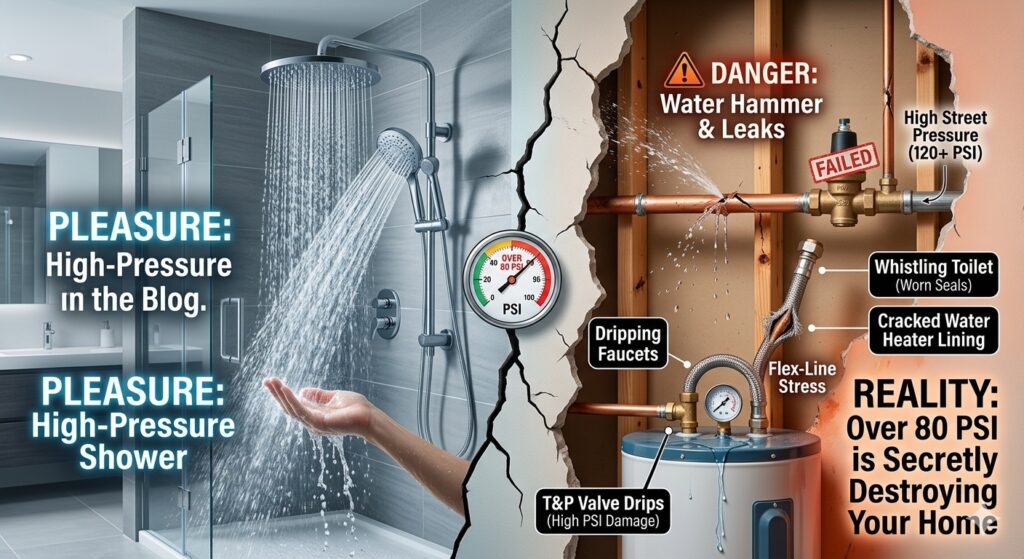
Everyone loves a high-pressure shower. It feels great, but in the plumbing world, anything over 80 PSI (pounds per square inch) is a ticking time bomb for your home.
Most homes in Riverside County are fed by municipal lines that can reach 120+ PSI. To protect your house, you have a Pressure Reducing Valve (PRV). But here’s the catch: PRVs usually fail “Open” after 5–7 years.
When they fail, your home is hit with “Street Pressure.” Here is what that high pressure is actually doing:
1. The “Whistling” Toilet & Dripping Faucets High pressure wears out the rubber seals in your toilet fill valves and faucet cartridges. If you find yourself replacing these every year, you don’t have bad parts—you have a pressure problem.
2. The Water Heater “Pop” Ever hear a loud “thud” when your water turns off? That’s Water Hammer. High-pressure water moving at high speeds slams into your valves, eventually cracking the internal glass lining of your water heater.
3. The Flex-Line Blowout Those braided stainless steel lines under your sink and behind your washing machine? They are rated for high pressure, but constant 100+ PSI causes them to “fatigue.” When they snap, they can flood a house in minutes.
How to Test Your Home (The $10 DIY Trick): Go to a hardware store and buy a simple pressure gauge that screws onto your outdoor hose bib. If it reads over 75 PSI, your PRV has failed.
The Solution: Replacing a PRV is a “preventative” repair that saves you from a $5,000 flood restoration. We specialize in High-Precision Pressure Balancing.